
How Do I Get Rid of Musty Smell in Basement

Updated: Feb 9

How to Get Rid of a Musty Basement Smell (and Keep It Gone)
“This article may contain affiliate links, when you buy through our links, we may earn a commission”
That musty basement smell is more than “old-house vibes.”
It’s your home telling you something is staying damp long enough to grow mildew/mold, hold bacteria, or soak into porous materials—and once that smell gets into cardboard, carpet pad, wood framing, or insulation, it can feel impossible to fully “air out.”
The good news: you can usually fix it without tearing your basement down to studs.
The better news: the process is straightforward once you stop treating the smell like the enemy… and start treating moisture like the enemy.
In this guide, I’ll walk you through:
quick relief steps you can do today,
a simple diagnosis method (so you’re not guessing),
the right cleaning/remediation approach for the level of problem,
and a prevention plan that keeps your basement smelling neutral long-term.
Health & safety disclaimer: Musty smells can involve mold exposure and irritants. If anyone in the home has asthma, severe allergies, is immunocompromised, or you suspect a large mold problem or sewage contamination, consider consulting a qualified professional. Follow safety guidance and use protective equipment during cleanup.
Why basements get musty (the smell’s “food source”)
A musty odor typically comes from microbial growth (mold/mildew) or materials that have absorbed moisture and are off-gassing that “damp” scent. The basement is the perfect environment because it’s often:
cooler than the rest of the house (so moisture condenses),
less ventilated (stale air holds odor),
and in contact with soil (moisture pressure + seepage).
The EPA’s core message is simple: control moisture and you control mold—which is why “just cleaning” rarely works if dampness continues.
The most common sources of musty basement smell
High humidity (often seasonal)
Small foundation seepage after rain
Condensation on cold pipes/ducts
Damp crawl spaces adjacent to basement
Wet carpet pad, rugs, cardboard boxes
Floor drains / sump pits / plumbing leaks
Mold behind finished walls or under flooring
And here’s the “gotcha” that traps people:
The #1 mistake that makes musty smells return
They remove the odor, but not the moisture pattern.
Air fresheners, charcoal, and even strong cleaners may reduce smell temporarily—but if your basement stays above mold-friendly humidity or keeps getting tiny water intrusions, the smell returns in a week or two.
In my experience, most “mystery musty basements” boil down to one of two things:
the humidity is too high for too long, or
water is getting in somewhere (even a little) after rain.
First: Quick relief in the next 24–48 hours (without masking)
If you need the smell better fast (guests coming, you’re listing the house, you’re just done with it), do this in order:
Step 1: Remove the odor sponges
Musty odor loves porous materials. Pull these out of the basement temporarily:
cardboard boxes and paper (store in plastic bins)
damp rugs, old carpet remnants, carpet padding
upholstered furniture (if it smells musty, it’s holding moisture)
old insulation scraps, rotting wood, forgotten laundry
Pro tip: If a box smells musty, assume the smell is inside the contents too. Move it upstairs and you’ll spread odor.
Step 2: Dry the air aggressively
Run a dehumidifier continuously for 48 hours
Close basement windows on humid days (outside air can make it worse)
Run your HVAC fan (if it helps circulate to main return)
Target: Get basement relative humidity under 60% quickly (lower is often better, but comfort matters). Guidance on keeping RH controlled below the higher-risk range is consistent across major indoor air resources.
Step 3: Clean the “smell surfaces” (not just the floor)
Wipe down:
exposed concrete walls and floors
baseboards and trim
shelves, joists, and any dusty surfaces
Use a simple solution (choose one):
mild detergent + water for general grime
hydrogen peroxide-based cleaner for mildew-prone surfaces
Avoid mixing chemicals (especially bleach + ammonia—dangerous fumes)
Step 4: Swap in odor control that doesn’t pretend to fix moisture
Place activated charcoal bags or baking soda tubs near the stink zone. This helps while drying is underway, but remember it’s support, not the cure.
Diagnose the cause in 15 minutes: “If this, then that”
Use this troubleshooting flow to stop guessing.
If the smell is strongest after rain…
Likely cause: seepage through foundation, poor grading, clogged gutters, downspouts dumping near the house, or hydrostatic pressure.
Do this:
Walk the exterior during/after rain:
Is water pooling near the foundation?
Are gutters overflowing?
Do downspouts discharge within 3–5 feet of the house?
Check inside:
damp line at the base of walls
efflorescence (white powdery deposits on concrete)
damp corner smells
If the smell is worst in summer…
Likely cause: humidity + condensation (warm moist air meeting cool surfaces).
Do this:
Put a $10 hygrometer down there.
If RH is consistently above ~60–65%, you’ll keep feeding musty odor.
If the smell is strongest near the floor drain or sump…
Likely cause: dry trap, biofilm, or stagnant water in sump pit.
Do this:
Pour water into the floor drain to refill trap (if it’s dry).
Clean the drain area.
Make sure sump pit is covered and vented properly.
If one room/closet smells worse than the open basement…
Likely cause: low airflow + hidden damp material (behind drywall, under flooring, inside a storage closet).
Do this:
Crack the area open (remove a small baseboard section if needed).
Look for condensation lines, staining, or soft drywall.
If it smells “sewage-y” or rotten rather than musty…
Likely cause: plumbing vent issues, cracked drain line, sewage ejector issues.
Do this: stop DIY guessing and call a plumber—this is not an “odor absorber” problem.
The real fix: moisture control (your musty smell elimination plan)
Here’s the framework I prefer because it’s reliable:
Stop water entry
Lower and stabilize humidity
Remove contaminated porous materials
Clean remaining surfaces appropriately
Prevent future moisture with airflow + sealing
Let’s break that down.
Step 1: Stop water entry (the exterior fixes that outperform gadgets)
If you can only do one “big win,” do this section.
Fix grading and runoff
Soil should slope away from the home (even a few inches over a few feet helps)
Don’t let mulch beds become water-holding moats
Extend downspouts
Downspouts that dump right at the foundation are a musty basement’s best friend.
Low-cost improvement: downspout extenders.
Clean and repair gutters
Overflowing gutters often mimic a “foundation leak.”
Seal obvious penetrations
Look for:
pipe penetrations through foundation
cracks, gaps, window wells
Important: Sealing inside cracks without managing exterior water can be a temporary band-aid.
Step 2: Control humidity (the basement “set it and forget it” strategy)
Your target humidity range
A practical goal for most basements is:
under 60% RH (to reduce conditions that lead to microbial growth)
many homeowners find comfort and odor control improve even more around the mid-range, as long as you don’t over-dry.
The simple “dehumidifier sizing” reality
Manufacturers advertise big numbers. Your basement’s real-world needs depend on:
square footage
how damp it gets (seasonal vs daily seepage)
whether the basement is finished
how often doors are opened
Common mistake: buying too small a unit and running it forever—then concluding “dehumidifiers don’t work.”
Where to place it
Put it near the dampest area, not the center of the room.
Keep space around the intake/exhaust.
Drain it continuously if possible (hose to a drain or sump).
A quick formula you can use today
Buy a cheap hygrometer.
Track RH morning and evening for 3 days.
Set the dehumidifier to hold RH below 60%, then adjust downward if odor persists.
If you want a dehumidifier that can handle basements without constant babysitting, here’s one I recommend (choose the right size for your square footage): — Basement Dehumidifier
(Dehumidification is often the #1 tool that turns the corner on musty odor.)

Step 3: Decide what needs cleaning vs removal (this is where people waste weekends)
Here’s the truth: some materials never fully “un-must.”
Remove (don’t fight) these items if they smell
cardboard and paper goods
carpet padding
particleboard furniture
old insulation
fabric items that sat in dampness
Yes, it feels painful. But it’s often the difference between “better for a week” and “fixed.”
Cleanable surfaces
sealed concrete
tile
metal shelving
painted walls (unless the drywall behind is compromised)
Step 4: Clean and remediate safely (the “how,” not just the “what”)
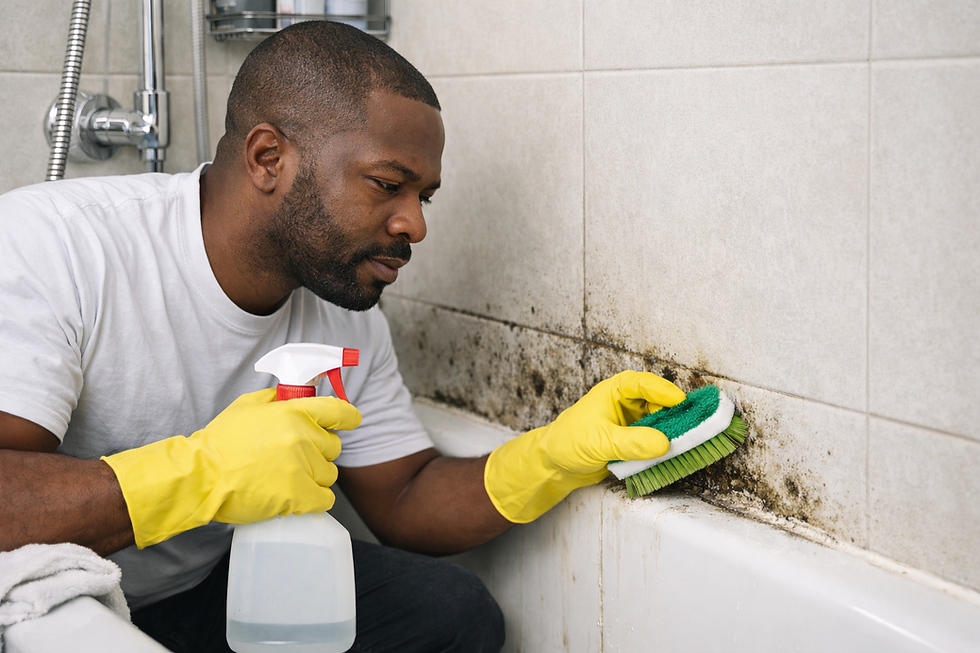
The EPA’s mold guidance emphasizes addressing moisture first and then cleaning up properly. CDC also notes mold grows where there is moisture (leaks, flooding, damp materials).
Safety basics (don’t skip these)
FEMA and public health guidance commonly emphasize protective gear for cleanup:


Cleaning approach (practical version)
Dry first (run dehumidifier + fans).
HEPA vacuum if you have it (dust holds spores and odor compounds).
Wipe hard surfaces with a cleaning solution (don’t soak drywall).
Discard porous items that are visibly moldy or smell deeply embedded.
If you see widespread visible mold, significant water damage, or you suspect contamination inside walls/insulation, it may be time for professional remediation.
What NOT to do (and why)
This section alone can save you money.
Don’t rely on air sampling to “prove” mold before you fix dampness
NIOSH notes that finding and correcting sources of dampness is more effective than air sampling for preventing health problems.
Don’t use bleach as your universal basement solution
Bleach can disinfect some hard surfaces, but it’s not a magic cure—and it doesn’t fix moisture. Plus, improper use creates irritating fumes. Use appropriate cleaners and focus on drying and removal.
Be cautious with ozone and “shock” odor treatments
They can be risky to use improperly, and they don’t replace moisture control. If you go this route, follow professional guidance and safety rules.
Comparison table: what actually works for musty basement smell?
Method | What it’s good for | What it won’t fix | Best use case |
Dehumidifier | Removes moisture that feeds odor | A hidden leak or soaked materials | Basements with RH issues, summer mustiness |
Air purifier (HEPA + carbon) | Reduces particles + some odor compounds | High humidity, wet carpet pad, seepage | Finished basements, allergy/asthma sensitivity |
Activated charcoal / baking soda | Mild odor reduction | Moisture source, mold growth | Temporary support while drying/cleaning |
Drain trap refill + drain cleaning | Solves “funky drain” odor | Whole-basement dampness | Smell localized to floor drain area |
Sealing + ventilation tweaks | Prevents humid air intrusion | Existing mold in porous materials | After you’ve dried/cleaned and want prevention |
If your basement is finished or someone in your home is sensitive to mold/dust, a HEPA + carbon purifier can be a smart add-on: — HEPA + Carbon Air Purifier

Cost-saving insights most beginners miss
1) Your cheapest moisture fix is outside
A $20 downspout extender can outperform a $300 gadget if water is dumping at the foundation.
2) Basements hate open windows in humid weather
It feels like “fresh air,” but humid outdoor air can condense on cool basement surfaces and make odor worse.
3) Cardboard is basically a smell sponge
Switching to sealed plastic bins is one of the fastest “why did this help so much?” changes.
A musty basement smell checklist (copy/paste and use)
Your 1-hour musty smell assessment
Measure RH (hygrometer) morning/evening
Check smell pattern: after rain vs seasonal vs always
Inspect corners/base of walls for dampness/efflorescence
Check drains/sump for stagnant odor
Remove cardboard/porous “odor sponges”
Identify the worst-smelling zone (specific corner? closet? near stairs?)
Your 48-hour action plan
Run dehumidifier continuously
Improve airflow (fans, open interior doors)
Wipe down surfaces; vacuum dust
Remove/replace musty porous items
Re-check RH and odor intensity
Your prevention plan (weekly/monthly)
Keep basement RH under your target threshold
Clean dehumidifier filter and ensure drainage line is clear
Inspect gutters/downspouts seasonally
Store items off the floor and in sealed bins
When you should call a pro
Consider professional help if:
there’s persistent water intrusion you can’t locate,
you have recurring flooding,
visible mold covers a large area,
odor is strongest behind finished walls,
anyone in the home has serious respiratory sensitivity.
OSHA also notes mold can cause allergic reactions and that prevention/remediation matters for health reasons. CDC describes possible health effects from damp/moldy environments, especially for sensitive individuals.
Next Steps and Key Takeaways
Musty smell is a moisture problem first
Start with drying the air, removing odor sponges, and finding the dampness pattern (after rain vs seasonal).
Use tools that match the cause:
humidity issue → dehumidifier + sealing + airflow
drain odor → trap refill + cleaning
hidden damp materials → remove/repair, not just deodorize
Keep humidity controlled long-term; standards and public health guidance consistently point toward avoiding high RH conditions that promote microbial growth.

Comments