
How to Get Rid of Red Wine Stains

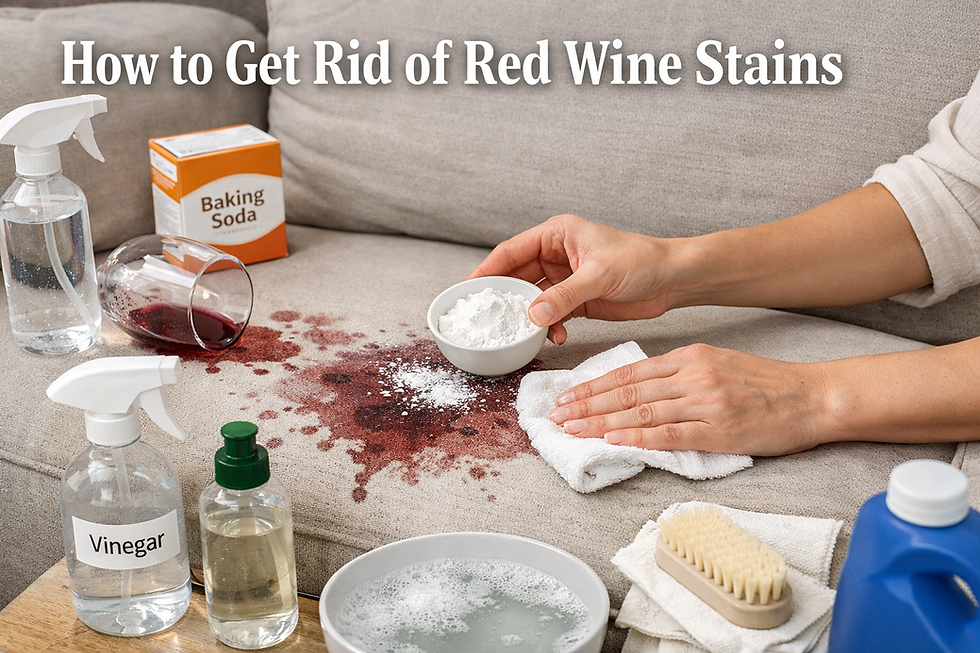
How to Get Rid of Red Wine Stains: The Complete Real-Life Guide That Actually Works
Red wine stains feel dramatic. One second you’re relaxing, and the next you’re staring at a dark crimson splash on your shirt, couch, rug, or tablecloth, already imagining it living there forever.
The good news? Most red wine stains are removable. The key is not using every trick you’ve heard on the internet. The key is using the right method for the right surface, and doing it in the right order.
In my experience, most people don’t fail because red wine is impossible to remove. They fail because they panic, scrub too hard, use hot water too soon, or throw a stained item in the dryer before checking whether the stain is really gone. That’s what turns a bad spill into a permanent reminder. The American Cleaning Institute recommends cool water, pretreating, and laundering based on the fabric’s care instructions, while textile-care guidance also stresses following the garment label and treating “dry clean only” items differently.
This guide "How to Get Rid of Red Wine Stains" will show you exactly what to do for:
Fresh red wine stains
Dried or set-in stains
Clothes
Carpet
Upholstery and couches
Delicate fabrics
White and colored items
And yes, I’ll also tell you which hacks are worth trying first and which ones are overrated.
The first 5 minutes: what to do immediately after a red wine spill
If the stain is fresh, this is your moment. Speed matters.
Do this right away
Blot immediately with a clean white cloth or paper towel.
Work from the outside of the stain inward so it doesn’t spread.
Apply cool water or club soda lightly to dilute the wine.
Keep blotting until transfer slows down.
Move to a targeted treatment based on the material.
The American Cleaning Institute advises sponging or soaking wine stains with cool water first, then pretreating before laundering. Iowa State Extension similarly recommends prompt treatment and a dish-soap-and-water solution for carpet and upholstery.
Do not do this
Don’t rub aggressively
Don’t use hot water first
Don’t toss it in the dryer “to see what happens”
Don’t pour random cleaners together
Don’t use chlorine bleach unless the fabric specifically allows it
Heat can set many stains more deeply, and chlorine bleach has important safety and fabric limits. Oxygen bleach is generally gentler, but even then, it is not for every fabric.
Why red wine stains are so stubborn
Red wine is tough because it contains deeply pigmented compounds and tannins that cling to fibers and porous surfaces. That’s why the stain often looks worse as it dries. Some laundry guidance also notes that wine behaves like other tannin or fruit-based stains and should be treated quickly with the correct detergent-based approach rather than with natural soap.
That’s also why “just water” usually isn’t enough. Water can help in the first few minutes, but you almost always need a follow-up cleaner or stain treatment.
Best methods for removing red wine stains: what works best and when
Here’s the simple comparison most people need.
Method | Best for | Strengths | Watch-outs |
Cool water + blotting | Fresh spills on most surfaces | Fast, safe first step | Not enough by itself for full removal |
Club soda | Fresh stains on fabric, carpet, upholstery | Gentle, easy, low-risk | Can oversaturate upholstery if you pour too much |
Dish soap + water | Carpet, upholstery, washable fabric pre-treatment | Cheap and reliable | Must blot, not scrub |
Hydrogen peroxide + dish soap | White or light-colored washable fabrics | Strong on visible stains | Can lighten color; test first |
Oxygen bleach soak | Washable fabrics | Great follow-up for lingering stains | Avoid wool/silk unless product says safe |
Professional dry cleaner | Silk, wool, structured garments, “dry clean only” | Lowest risk for expensive items | Costs more |
ACI recommends oxygen bleach or chlorine bleach only when safe for the fabric, and FTC care-label guidance makes clear that “dry clean only” means the garment should not be safely washed at home.
My preference? For most everyday accidents, I start with blotting + cool water/club soda + dish soap, then escalate only if needed. It’s cheap, gentle, and less likely to create a second problem.
How to Remove Red Wine from Clothes
Method 1: For washable everyday clothing
This is the most dependable method for cotton, polyester, blends, and many colorfast fabrics.
What you need
Clean white cloth
Cool water
Liquid laundry detergent or dish soap
Stain remover
Oxygen bleach if needed
Steps
Blot the excess wine.
Run cool water through the back of the stain if the fabric is washable.
Apply liquid detergent or stain remover directly to the stain.
Let it sit for 5 to 10 minutes.
Wash according to the care label.
Air dry first.
If the stain is still visible, rewash with oxygen bleach if safe.
ACI specifically recommends cool water, pretreatment, and laundering, with oxygen bleach as an option when appropriate.
Method 2: For white shirts or light-colored fabrics
If the stain is still visible after the first wash, a stronger method can help.
Hydrogen peroxide + dish soap method
Mix 2 parts hydrogen peroxide with 1 part dish soap
Dab onto the stain
Let sit for 10 to 20 minutes
Rinse thoroughly
Launder as usual
This can work very well on white or very light fabrics. But test first. Older textile-care guidance notes that hydrogen peroxide is generally fiber-safe, though dyed fabrics should be checked for colorfastness.
Important warning: This method may lighten darker colors. I would not use it blindly on deep navy, black, burgundy, emerald, or delicate prints.
Method 3: For dried red wine stains on clothes
Set-in stains are harder, but not hopeless.
Steps
Re-wet the stain with cool water or club soda.
Apply liquid detergent or stain remover.
Let it sit for at least 10 minutes.
Soak in warm water with oxygen bleach if the care label allows.
Wash.
Air dry and inspect.
This “rehydrate first, then treat” approach is often what saves an older stain.
How to get red wine stains out of carpet
Carpet is where people usually make the biggest mistake: they scrub. That pushes pigment deeper.
What to do instead
Blot up as much wine as possible.
Mix 1 tablespoon liquid dishwashing detergent with 2 cups cold water.
Sponge the stain gently.
Blot with a dry cloth until the liquid is absorbed.
Repeat until the stain fades.
Rinse lightly with cool water and blot dry.
That dish-soap formula is specifically recommended by Iowa State Extension for carpet and upholstery.
Optional backup step
If the stain lingers:
Try a small amount of club soda
Blot again
Repeat the soap solution
Carpet safety note
Always test any cleaner in a hidden area first, especially on wool rugs, patterned rugs, or vintage carpets.
How to get red wine stains out of upholstery and couches
Upholstery is trickier because too much liquid can create a water ring or push the stain into the cushion.
Best method
Blot gently with a dry white cloth.
Apply a small amount of club soda or cool water.
Blot again.
Use the same dish soap + cold water solution sparingly.
Dab, don’t soak.
Finish by blotting with a dry towel.
This is one of those times where less liquid is better. Saturating a couch is how you turn one visible stain into a larger, dull ring.
When to call a pro
Call a professional upholstery cleaner if:
The fabric is silk, velvet, rayon, or antique
The cushion cannot be opened and dried properly
The stain is large and old
The sofa has a “S,” “X,” or dry-clean-only style code from the manufacturer
What about salt, baking soda, and club soda?
Let’s talk honestly.
Club soda
This is the household remedy I think earns its reputation. It’s easy, gentle, and often effective as a first response, especially on fresh spills. It works best when paired with blotting, not as a magic one-step fix. Consumer testing and expert cleaning advice often rate it as a useful first-line option.
Salt
Salt can absorb fresh moisture, and it’s most useful when you need an emergency stopgap on sturdy fabrics or table linens. But I don’t love it for delicate textiles because coarse salt can be abrasive, and it still usually needs follow-up treatment. Recent home-care guidance also treats it more as a helper than a full solution.
Baking soda
It can help in some DIY stain routines, especially as a paste, but it is not my first choice for clothing. It’s more of a “use if that’s what you have” option than a gold-standard method.
The biggest mistakes that make red wine stains worse
These are the mistakes I see over and over.
1. Rubbing instead of blotting
Rubbing spreads the stain and grinds pigment deeper into the fibers.
2. Using heat too early
Dryers, hot water, and steam can set the stain before you’ve fully removed it.
3. Ignoring the care label
FTC guidance makes clear that clothing labels matter. “Dry clean only” is not a casual suggestion.
4. Using peroxide on dark fabrics without testing
It may remove the wine and the color right along with it.
5. Letting the stain sit overnight untreated
Even a quick blot-and-club-soda first step is better than doing nothing.
6. Drying the item before checking the stain
Air dry first. Always.
Troubleshooting: if the stain isn’t coming out, do this next
If the stain is still pink after washing
Re-treat with liquid detergent
Soak in oxygen bleach if safe
Rewash and air dry again
If the stain turned bluish or dull
Don’t panic
Wine is a tannin stain, and some cleaners can shift the color temporarily
Re-rinse and use a proper laundry detergent-based treatment next
If the stain is on silk, wool, or “dry clean only”
Stop home experimenting
Blot
Take it to a cleaner as soon as possible
Tell them it’s red wine
If the stain is on a mattress
Blot well
Use a tiny amount of dish soap solution
Avoid soaking
Blot dry with towels and use airflow to dry fully
If a ring forms on upholstery
Lightly dampen the surrounding edge with plain water
Blot outward evenly
Dry with airflow, not heat
Cost-saving tips most beginners overlook
A few smart habits can save a favorite item and some money.
Keep a small stain kit at home: white cloths, dish soap, stain remover, hydrogen peroxide, and oxygen bleach.
Air dry before deciding a stain is permanent.
Treat immediately, even if you can’t wash right away.
For expensive garments, skip experiments and go straight to a pro.
Honestly, this is where people overspend. They ruin a $90 blouse trying six internet hacks instead of paying for one careful professional cleaning.
A simple red wine stain removal checklist
Use this anytime a spill happens.
Quick checklist
Blot immediately
Do not rub
Use cool water or club soda first
Check the care label
Choose the method based on the surface
Use dish soap solution for carpet/upholstery
Use detergent/stain remover for washable clothing
Use peroxide only after testing
Avoid heat until stain is fully gone
Air dry and inspect
Below are natural spots to insert your affiliate links without making the article feel forced.
A laundry stain remover stick in the clothing treatment section: my go-to stain remover for fresh clothing spills
An oxygen bleach product in the rewash/soak section: a color-safe oxygen bleach I like for lingering stains
A portable upholstery spot cleaner in the carpet/couch section: this compact upholstery cleaner for bigger spills
A set of white microfiber cloths in the emergency kit section: these absorbent cleaning cloths I keep in a stain kit
That’s usually the sweet spot: useful, relevant, and not pushy.
FAQs: How to get rid of red wine stains
1) Are red wine stains permanent?
Not usually. Fresh stains are often removable, and even dried stains can improve a lot with rehydration and the right treatment. The fastest action gives you the best odds.
2) Does club soda really work on red wine stains?
Yes, especially as a first-response treatment for fresh spills. It works best with blotting and follow-up cleaning, not as a one-step miracle.
3) Is salt the best fix for red wine stains?
Not necessarily. Salt can help absorb a fresh spill, but it usually works best as a temporary helper, not a complete solution.
4) Can I use hydrogen peroxide on colored clothes?
Only with caution. Test first on a hidden area. It can lighten dyes, especially on darker fabrics.
5) What removes old red wine stains?
Start by re-wetting the stain, then apply detergent or a stain remover, followed by an oxygen bleach soak if the fabric allows it. Repeat before using heat.
6) Should I use hot or cold water?
Start with cool water. Hot water too early can make stain removal harder.
7) What if the label says dry clean only?
Take it seriously. The FTC care-label rule treats “dry clean only” as a warning that the garment can’t safely be washed.
Next steps / key takeaways
If you remember only three things from this guide, make it these:
Blot fast and don’t rub.
Use the method that matches the material.
Never use heat until the stain is fully gone.
For washable clothes, start with cool water, pretreat, wash, and air dry. For carpet and couches, use a light hand with a dish-soap-and-cold-water solution. For delicate or “dry clean only” fabrics, don’t gamble—go professional.
Red wine stains look intimidating, but they’re usually beatable. Calm beats panic. Method beats force. And the faster you act, the better the result.


Comments