
How Do I Get Rid of Wasps


How Do I Get Rid of Wasps? The Safe, No-Panic Plan That Actually Works
Wasps have an incredible talent for showing up at the exact moment you want to relax—when you’re grilling, taking out the trash, or letting the kids run through the yard barefoot.
And if you’ve ever tried the “spray and pray” method, you already know the truth: wasps don’t forgive sloppy strategy.
This guide is built to help you:
get rid of wasps without getting stung,
remove or treat nests the right way,
and make sure they don’t come back next week.
Quick note before we start: stings can be serious. If anyone in your home has a history of severe allergic reactions, treat wasps like a medical risk—not a weekend project. OSHA and CDC/NIOSH emphasize that severe allergic reactions can be life-threatening and people with a known severe allergy may need to carry epinephrine.
Safety disclaimer: This guide is general information—not medical advice. If you have allergy risk, nests inside walls, high/hidden nests, or aggressive species, contact a licensed pest professional.
Step 1: Identify what you’re dealing with (this changes everything)
Before you do anything, take 2 minutes to observe from a safe distance.
Common “wasp problems” are usually one of these:
Paper wasps: umbrella-shaped open comb nests under eaves/railings.
Yellowjackets: often ground nests or wall voids; aggressive around food/trash.
Hornets (bald-faced hornets are common in some areas): large aerial nests; can be very defensive.
Solitary wasps (mud daubers): usually less aggressive; nests are mud tubes.
Why it matters: Ground and wall-void nests are the ones that go sideways fastest. Penn State Extension specifically notes different removal considerations for common stinging insects and why nighttime treatment reduces flight/visibility.
Step 2: Decide: DIY or call a pro (use this quick rule)
I’m pro-DIY when it’s low-risk and you can do it smart. I’m also pro-calling-a-pro when the risk isn’t worth saving $150.
Call a pro if ANY of these are true:
Nest is inside a wall/attic or you hear buzzing in walls
Nest is higher than your reach without a ladder
You see heavy activity (lots of wasps coming/going)
Someone in the household has allergy/asthma risk
It’s in a high-traffic zone (front door, deck, kids’ play area)
You’ve already tried once and they’re still active
Purdue Extension points out that controlling bees/wasps can be hazardous and pros are equipped for situations where control is warranted.
The best time to get rid of a wasp nest (and why it’s almost always “night”)
If there’s one “pro tip” I wish everyone knew, it’s this:
Treat the nest at night—not because it’s dramatic, but because it’s safer.
At night:
more wasps are in the nest,
they’re less active and have trouble seeing, and
fewer are flying, meaning fewer surprise stings.
Multiple extension resources emphasize nighttime/evening treatment for safety and effectiveness.
Your options, compared: What actually works?
Quick comparison table: Best wasp removal methods
Method | Best for | Pros | Cons | My take |
Long-range aerosol wasp spray | Exposed nests (eaves, sheds) | Distance, fast knockdown | Can miss returning wasps; risky if too close | Great for small to medium exposed nests |
Insecticide dust | Wall voids, ground nests | Reaches deep into nest | Must apply correctly; higher risk | Best for void/ground nests—careful |
Wasp traps | Reducing activity near patios/trash | Low risk, passive | Won’t remove a nest alone | Good support tool, not the main plan |
Physical removal (early nest) | Tiny starter nests | Cheap, fast | Only safe when activity is minimal | Great in early spring or very small nests |
Professional removal | Large, hidden, risky nests | Safest, thorough | Costs money | Worth it more often than people think |
Want “grab and go” supplies?
Long-range spray: Long-Range Wasp Spray

Protective veil/gloves: Protective Gear

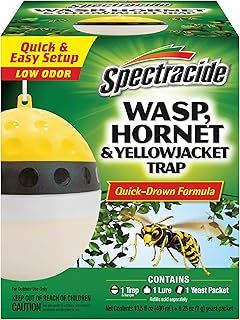
Wasp traps for patios: Wasp Trap Set
Caulk/sealant for prevention: Exterior Caulk
Step-by-step: How to get rid of an exposed wasp nest (eaves, railing, shed)
What you’ll need
Long sleeves, pants, closed shoes (ideally gloves + face protection)
Flashlight with a red filter (less likely to rile insects)
Long-range wasp spray or labeled product appropriate for wasps
A clear exit path (seriously—plan your retreat)
CDC/NIOSH safety guidance for avoiding stings includes covering skin, avoiding scented products, and staying calm (don’t swat).
The Night Treatment Plan (simple, effective)
Wait until after dusk (full dark is even better).
Turn off porch lights near the nest (light attracts/activates).
Stand farther than you think you need (use the spray range).
Apply spray directly into the nest opening and across the surface.
Leave immediately. Don’t hang around to “see if it worked.”
Check activity the next day from a distance.
If still active that night, repeat once.
After 24–48 hours of no activity, you can remove the dead nest (optional for some species, but helpful for peace of mind).
Extension sources emphasize treating in the evening and thinking through lighting, ladder safety, and bystanders.
Common mistake I see: people spray once, then knock the nest down immediately. That’s how you end up with angry survivors and a sprint you didn’t plan.
How to get rid of ground wasps (yellowjackets) without chaos
Ground nests are a different game. Yellowjackets can be aggressive, and they may have multiple entrance holes.
Safer approach
Treat at night (same reasons as above).
Do not stand directly over the entrance.
Use a product labeled for yellowjackets/ground nests and follow the label directions.
Important: Pesticide labels are legal instructions—EPA guidance emphasizes using products according to label directions and proper disposal practices.
What I generally prefer (experience-based)
For ground nests, I generally prefer calling a pro unless the nest is clearly small and away from people/pets. The cost is often less than the “one sting too many” scenario—especially if someone panics and gets swarmed.
Wasps in a wall? Don’t “seal them in” (this is the nightmare scenario)
If you see wasps entering/exiting a crack in siding, a vent, or a gap near soffits, you may have a wall void nest.
Here’s what NOT to do
Don’t caulk the entrance while they’re alive.
Don’t spray random chemicals into the wall and hope.
Don’t poke around inside the void.
Sealing active wasps inside can drive them into the interior of the home.
What to do instead
Mark the entry point.
Reduce indoor risk (close nearby windows, keep kids/pets away).
Consider professional removal—this is exactly what pros are for.
Prevention: How to stop wasps from coming back (this is where the real win is)
Wasps are persistent, but they’re also predictable.
The Wasp-Proofing Checklist (save this)
Around the home
Seal gaps around soffits, fascia boards, and siding seams
Repair torn window screens
Add fine mesh to vents where appropriate
Fill cracks around outdoor light fixtures and hose bibs
Keep eaves clean and check weekly in early season
Around food & trash
Keep trash lids tight and rinse sticky cans/bottles
Clean grill grease trays
Don’t leave pet food outside
Pick up fallen fruit from trees
CDC/NIOSH notes that some stinging insects are attracted to discarded food and recommends keeping areas clean.
Cost-saving insight: Prevention work (a $6 tube of caulk + 20 minutes) often prevents the $200–$500 “late summer nest” problem.
Helpful tool:
Expandable Foam for Gaps (use carefully)]
Troubleshooting: “If this, then that” (the fastest way to the right fix)
Use this as your decision guide:
If you see a small open nest under an eave → treat at night with long-range spray; remove after inactive.
If wasps are hovering near a patio with no nest visible → set traps away from the patio + inspect eaves/rails + check trash/food sources.
If they’re entering a hole in siding/brick/soffit → likely wall void nest → avoid sealing → call a pro (recommended).
If they’re coming from the ground → likely yellowjackets → night treatment only + label-following + consider pro.
If you get repeated nests in the same spots → your issue is access points + attractants, not “bad luck.”
What to do if you get stung (quick safety protocol)
Most stings are painful but manageable. The risk is allergic reaction.
Basic first aid (general)
Wash with soap and water
Use a cold pack for pain/swelling
Monitor for signs of allergic reaction
NIOSH guidance emphasizes monitoring for allergic reaction and basic first aid steps.
Seek emergency care immediately if you have:
trouble breathing, swelling of face/throat, dizziness, widespread hives
rapid heartbeat, nausea/vomiting with systemic symptoms
OSHA notes that people with a history of severe allergic reactions should consider carrying an epinephrine auto-injector and that severe reactions require immediate care.
Medical disclaimer: If you suspect anaphylaxis, call emergency services right away.
FAQ: Getting rid of wasps (real questions, real answers)
1) What kills wasps instantly?
A long-range aerosol labeled for wasps can knock down exposed wasps quickly, but “instant” depends on direct contact and nest access. For hidden nests (walls/ground), targeted approaches (often dust products or professional treatment) are more reliable.
2) Should I remove the nest after I spray it?
If it’s an exposed nest and there’s no activity for 24–48 hours, removing it can prevent lingering “investigation” by stragglers. Don’t remove it immediately after spraying—that’s a common sting-triggering mistake.
3) Why do people say to spray a wasp nest at night?
Because wasps are less active, many are inside the nest, and they have more difficulty flying/seeing in darkness—night treatment is repeatedly recommended by extension resources for safety and effectiveness.
4) Do wasp traps get rid of a nest?
Not usually. Traps can reduce numbers near patios and trash, but they rarely eliminate an established nest by themselves. Think of traps as “support,” not the main solution.
5) What scent keeps wasps away?
Avoiding sweet smells helps (perfume, scented lotions, sugary drinks left out). CDC/NIOSH specifically recommends avoiding perfumes/colognes and scented personal products to reduce attraction/interest.
6) Can I just seal the hole where they’re going in and out?
Not if they’re active. Sealing can force wasps into interior spaces. For wall void nests, it’s safer to treat properly first (often by a professional), then seal after activity stops.
Next Steps / Key Takeaways
If you only remember five things, make it these:
Identify the nest type and location first (exposed vs ground vs wall void).
Treat at night for safer, more effective results.
Don’t rush nest removal—wait until activity stops (24–48 hours).
Prevention is the long-term fix: seal entry points + remove attractants.
When it’s risky (hidden/high/large/allergy): call a professional—it’s often the best value.

Comments